



Facing Line of Fire Hazards: What Every Safety Leader Needs to Know
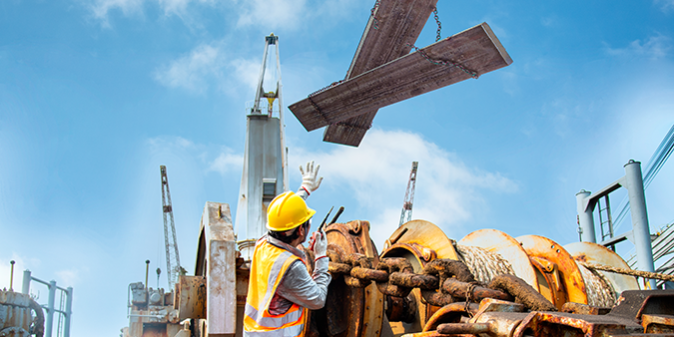
Don’t let “line of fire” hazards catch your team off guard. Review the top risks and practical steps to keep your team safe on high-hazard worksites.
January 13, 2026



Author: Curtis G. Martin
January 13, 2026
Safety professionals are well acquainted with the dangers of high-hazard worksites. While obvious hazards like falls and excavation cave-ins receive the lion’s share of attention, worksite veterans know that “line of fire” dangers can fly under the radar because they can occur in a split second, and often without warning.
The good news is that when you reinforce knowledge about these hazards and actions your team can take to mitigate them, they can be avoided. Regardless of your level of experience working in high-hazard environments, it’s essential to continually review “line of fire” dangers. Remember, safety is everyone’s responsibility.
Think of it as the simple and scary moment when a worker ends up exactly where a hazard is headed, hence the “line of fire” name. Incidents involving moving objects or the sudden release of energy can occur so quickly that an individual has little time to react. Here are the three most common types that safety professionals need to review and prepare their team for.
Struck-By Hazards: When a worker is hit by a vehicle, equipment, or a falling object.
Caught-In/Between Hazards: When a worker is squeezed or pinned between two or more objects.
Released Energy Hazards: When stored energy (electric, hydraulic, etc.) is suddenly released, it can cause equipment failure, arc flashes, or unexpected movement of parts that hit a worker.
Knowing these hazards and how to prevent them can be a matter of life and death. Let’s delve a little deeper into each one.
If you have ever stood near a swinging load or in a truck’s blind spot, you have felt that moment of uncertainty when your life could be forever changed by a moving object. Struck-by incidents are the most common and statistically dangerous of “line of fire” hazards. Consider the alarming numbers:
In 2020 alone, NIOSH reported 150 fatalities and 14,000 non-fatal injuries related to struck-by incidents in construction.
In 2019, NIOSH reported that struck-by incidents involving vehicles accounted for 47% of all construction fatalities.
At high-hazard worksites like refineries and construction, where heavy machinery, forklifts, dump trucks, and overhead loads are common, struck-by hazards can lurk around any corner. That is why reviewing these hazards with your team is critical to building a better safety culture.
Safety Reminder Tips from the OSCAsafe Team:
Look Before You Move: Keep pathways clear and use barriers when possible.
Understand Blind Spots: Use spotters, backup alarms, and wear high-visibility PPE.
Secure Overhead Loads: Never walk under suspended loads unless you are confirmed safe.
Conduct Pre-Task Hazard Assessments: Ask, “What could hit me?” or “What could fall on me?”
If you work at a manufacturing plant or in an environment where you must interact with or be near machinery in a confined space, you are aware of the danger of being pinched, crushed, or squeezed by moving equipment or between structures.
While less frequent, caught-in/between injuries are often more severe. Top concern areas for these types of injuries are heavy machinery with rotating or crushing parts, like conveyors and balers, poses significant risks. Shifts in materials or loads in cluttered environments amplify these dangers.
In 2022, the Bureau of Labor Statistics (BLS) reported 142 fatal caught-in/between occupational injuries. Most of these deaths resulted from being caught in running equipment or machinery.
Safety Reminder Tips from the OSCAsafe Team:
Implement Lockout/Tagout: Always verify machinery is de-energized before maintenance.
Guard Moving Parts: Restrict access when machines are operational.
Secure Trenches and Excavations: Proper shoring is non-negotiable.
Think Ahead: Ask, “If this part moves or fails, where will I be?”
If you work at a refinery or manufacturing plant with pressurized or hydraulic systems, you need to be aware of the danger of a sudden energy release. When pressure, electricity, or mechanical force builds up and then is released, serious injuries occur.
The sudden nature of these hazards is what makes them dangerous; in fact, OSHA notes they are one of the leading causes of struck-by incidents. Common stored energy risks include:
Pressurized system failures can send metal components flying like shrapnel.
Electrical arc flashes can reach 35,000°F, four times hotter than the sun’s surface.
Hydraulic or spring-loaded parts can snap back with crushing force.
If these sound dangerous, they are. According to OSHA, these types of hazards caused 48 deaths in 2023 and 17,690 days away, restricted or transferred (DART) in 2021-2022.
Safety Reminder Tips from the OSCAsafe Team:
Verify zero energy before work begins.
Bleed off pressure in lines and tanks before opening.
Stand clear of release paths for valves or fittings.
Use PPE rated for arc-flash protection.
Maintain clear communication during energized work.
Line of fire hazards are not just another training topic. They represent one of the most important conversations you can have with your team. When workers pause, plan, and picture the “what if,” prevention is achievable.
At OSCAsafe, we help teams build safer day-to-day habits through integrated training and compliance tools, so your people return home safe every single day.
If you want to delve deeper into “line of fire” prevention or explore tools and ideas that can help elevate your safety programs, our experts are glad to connect with you.